

There are three things most people know about traditional Belgian cuisine before they arrive: chocolate, waffles, and beer. All three are absolutely true, and all three are more complex than they seem. The waffles sold near the Grand-Place aren’t usually what Belgians actually eat. Not all chocolates are created equal. And beer with more than 1,500 varieties and its designation as part of UNESCO’s Intangible Cultural Heritage is worth a whole trip on its own.
Beyond these three famous specialties, Belgian food is built on dishes that most visitors never get to try: gray shrimp croquettes, Flemish beef stew, waterzooi, and stoemp. This guide tells you what to eat in Brussels during your city getaway and how to find the authentic specialties rather than their rough tourist versions.
What to eat in Brussels: the essential dishes
Moules-frites: the national dish
Mussels steamed in white wine with celery, onion, butter and fresh herbs, served in the cast-iron pot they were cooked in, alongside a generous portion of fries and a pot of mayonnaise. This is Belgium’s most internationally recognised dish, and at a good address, it justifies that status entirely. The mussels come from Zeeland in the Netherlands, where the tidal conditions produce a particularly flavoursome shellfish. The fries should be double-fried. The mayonnaise should be house-made. When all three elements are right, moules-frites is one of the most satisfying meals in European cooking.
Carbonnade flamande: Belgium’s other national dish
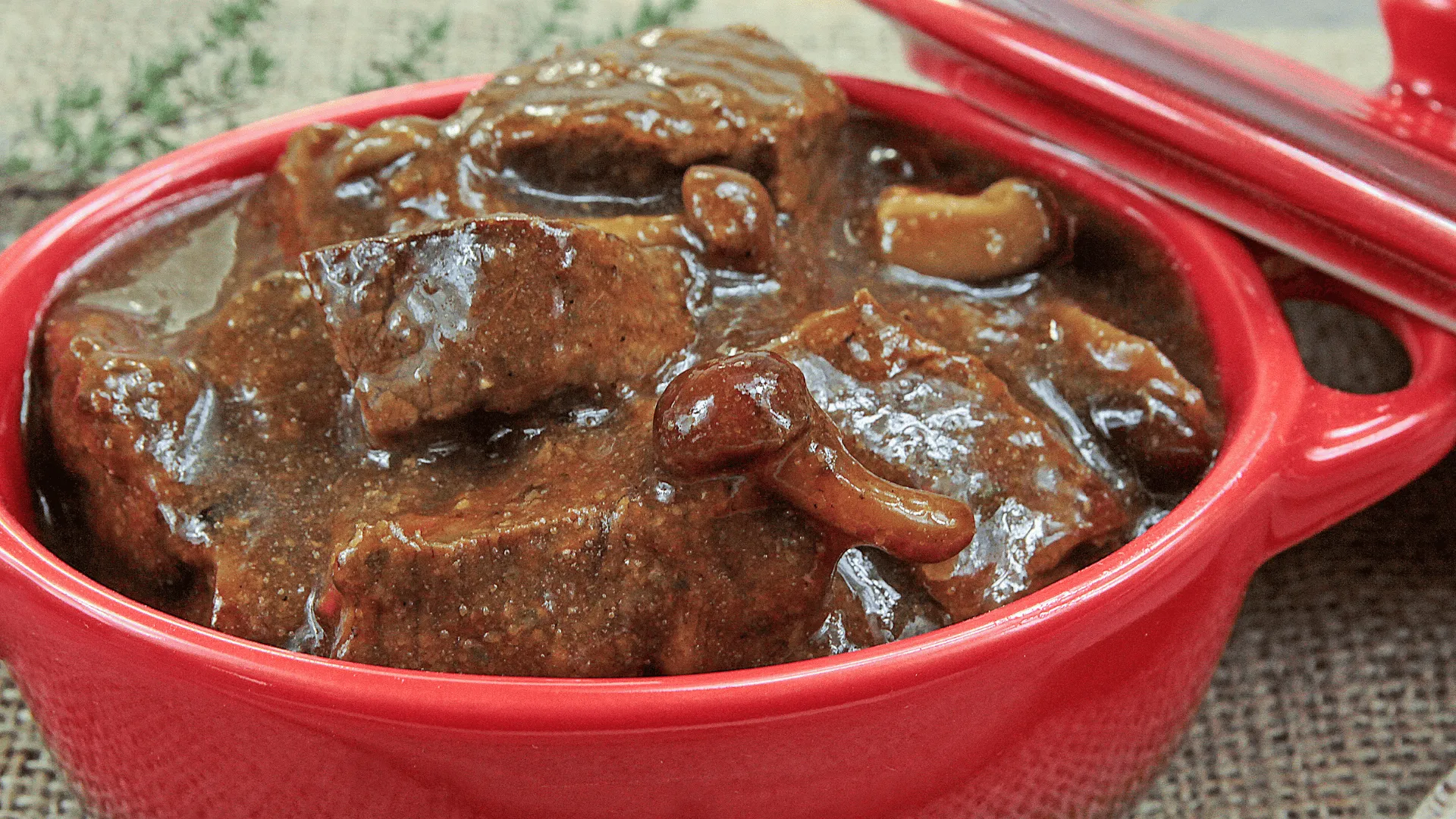
Beef slow-cooked in dark Belgian beer with onions, bread, brown sugar and mustard until the liquid reduces to a dense, complex sauce. Every Belgian household has its own version. Every Belgian brasserie serves one. The key ingredient is the beer, usually a Trappist or abbey ale, which gives the dish a depth that wine-based stews cannot replicate. Served with fries or stoemp, it is the definitive Belgian winter dish.
Croquettes aux crevettes grises: the starter worth ordering
Grey shrimp croquettes are among the most technically demanding dishes in Belgian cooking: a bécha mel sauce densely packed with tiny grey shrimps from the North Sea, coated in breadcrumbs and deep-fried to order. The contrast between the crisp crust and the creamy, intensely flavoured filling is remarkable. Bouillon Bruxelles was awarded Best Shrimp Croquette in Brussels in 2024, a reasonable starting point.
Stoemp: the underrated side dish
Mashed potato combined with a second vegetable leeks, carrots, Brussels sprouts, spinach cooked down until both elements become a single, deeply flavoured purée. Stoemp is the natural companion to sausages, black pudding or a braised rabbit. It is emphatically not elegant. It is emphatically delicious.
Waterzooi: from Ghent, eaten in Brussels
Originally a Ghent dish, waterzooi appears on menus across Brussels in two versions: chicken (poulet à la bruxelloise) or fish, stewed slowly in a broth of vegetables, cream and herbs and served with bread to soak up the liquid. It is subtle, aromatic and entirely unlike anything you will find in French or Dutch cooking. Order the fish version in winter when the chicken version dominates.
Belgian food in Brussels: the things tourists get wrong
The waffle
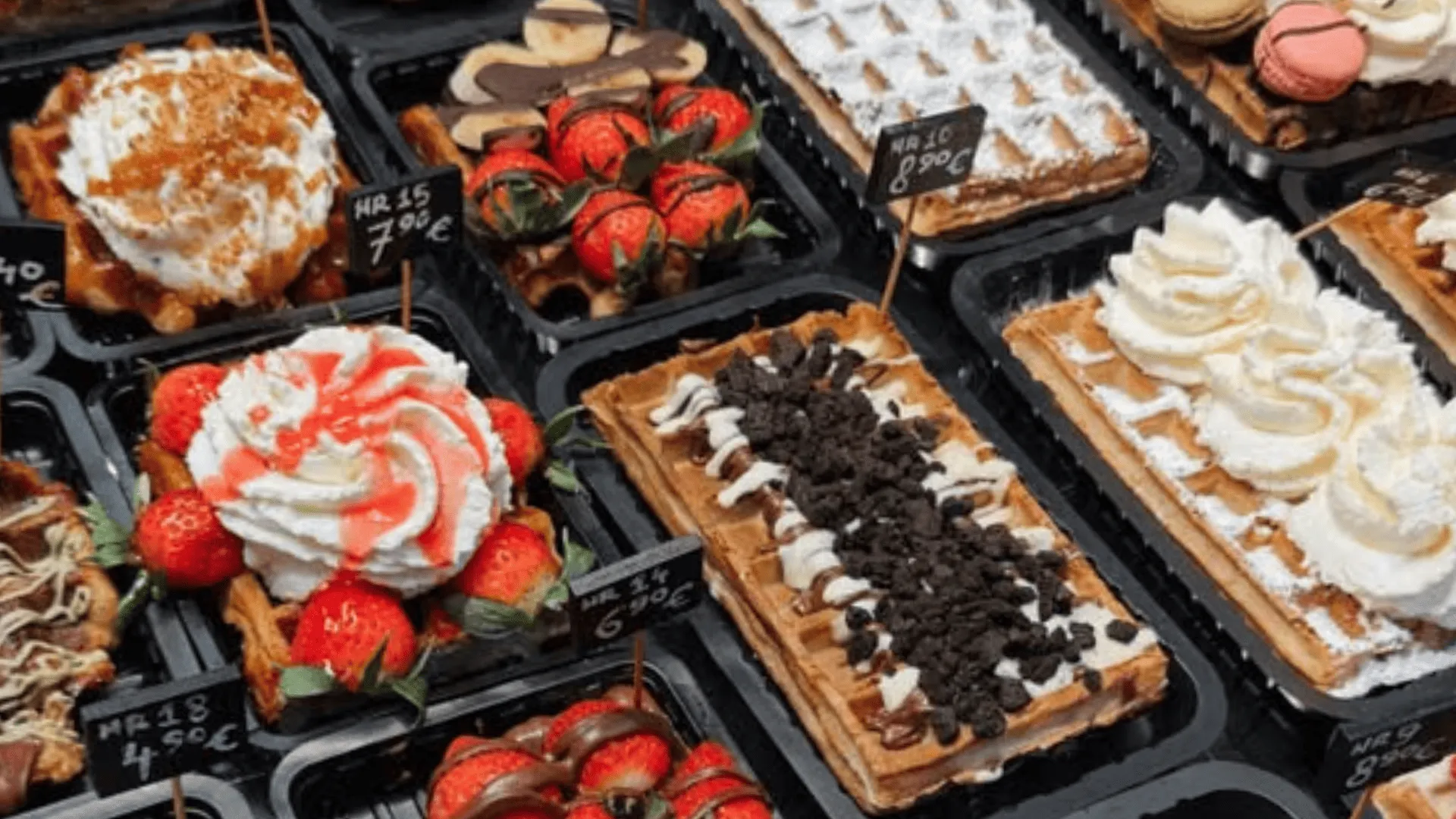
There are two Belgian waffles and they are entirely different things. The Brussels waffle (gaufre de Bruxelles) is rectangular, light, crispy and made with a yeast-based batter, it is typically eaten plain or with a modest topping and is not particularly sweet. The Liège waffle (gaufre de Liège) is round, dense, caramelised with pearl sugar and eaten warm from the stall, it is the one sold at Christmas markets and by street vendors.
The waffles piled high with whipped cream, strawberries and chocolate sauce sold in tourist shops near the Grand-Place are neither. They are a commercial invention aimed at visitors who have not been told the difference. Ask for a gaufre de Liège from a street vendor and eat it within three minutes of purchase. That is the correct experience.
The fries
French fries are Belgian. The word french comes from the old English verb to french, meaning to cut lengthwise, and has nothing to do with France. Belgium’s frites are traditionally cooked twice in animal fat: once at a lower temperature to cook the potato through, then again at a higher temperature to crisp the exterior. The result is categorically different from a single-fried chip. Served with house-made mayonnaise, not ketchup.
The best frites in Brussels city centre are consistently found at dedicated friteries rather than in brasseries. Place Jourdan, slightly east of the centre, is the address locals give most often.
Belgian beer: a brief orientation
Belgium produces over 1,500 varieties of beer. The tradition was inscribed on UNESCO’s Intangible Cultural Heritage list in 2016, the only national beer culture to hold this distinction. The main styles to understand for a Brussels visit:
Trappist ales are brewed by or under the control of Trappist monks, six Belgian abbeys produce them (Chimay, Orval, Rochefort, Westmalle, Westvleteren, Achel). They range from amber to dark brown, with complex malt and fruit characteristics.
Lambic and gueuze are Brussels’ own style: spontaneously fermented using wild yeasts from the Senne valley, unfiltered and slightly sour. Kriek (cherry) and framboise (raspberry) are lambic variants. À la Mort Subite on rue Montagne aux Herbes Potagères is the reference address for lambic in the city centre.
Saison is the farmhouse ale of Wallonia dry, effervescent, slightly spiced. Brasserie Dupont’s Saison Dupont is the benchmark.
For the full picture of where to eat all of the above, our guide to the best restaurants in Brussels for winter covers the addresses that do Belgian cuisine most justice. And for chocolate specifically, our guide to the best chocolate shops in Brussels covers the praline trail from the Galeries Saint-Hubert to the Sablon.
Breakfast at both Alma Grand-Place and Aris Grand-Place is served by Lloyd Coffee Eatery, a Brussels coffee house that understands the city’s food culture from the first cup of the day.
